Prescott Artificial Turf Pros
Desert-Adapted Turf Installs in Prescott, AZ
Desert-adapted artificial turf installs in Prescott, AZ with heat-resistant fibers built for elevation sun and winter freeze-thaw. Free estimates.
- 15+ Years local experience
- 500+ Projects completed
- Licensed & Insured
Serving Prescott and nearby communities.
Prescott sits at roughly 5,400 feet, which means turf here faces both intense elevation UV exposure in summer and real freeze-thaw cycling in winter, not just desert heat the way low-desert Phoenix installs do. Prescott Artificial Turf Pros builds desert-adapted installs that account for both ends of that swing instead of using a generic Arizona turf spec.
That means UV-stabilized fiber, base work that won't heave when the ground freezes and thaws, and infill chosen to manage heat without sacrificing winter durability.
What's included
What's Included with Desert-Adapted Turf Installs
Typically included: heat-resistant turf fiber, reflective infill, moisture-aware base prep, freeze-ready seaming allowances. Optional: cooling infill upgrade, expanded expansion-gap seaming for extreme temperature swings. Customer prep: flag any shaded vs full-sun zones in your yard so turf and infill can be matched per zone.
Want a clearer scope?
Get a Free EstimateHow it works
How Our Desert-Adapted Turf Installs Process Works
 Step 1
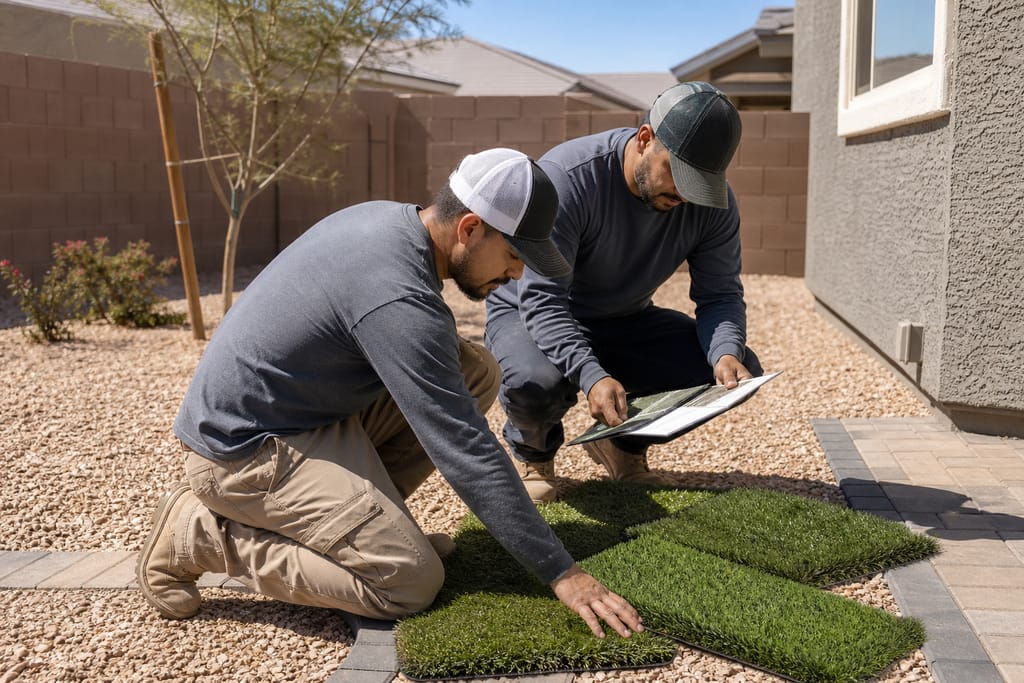
Heat tolerance planning
Turf products are picked based on how they hold up to Prescott's intense elevation sun.
 Step 2
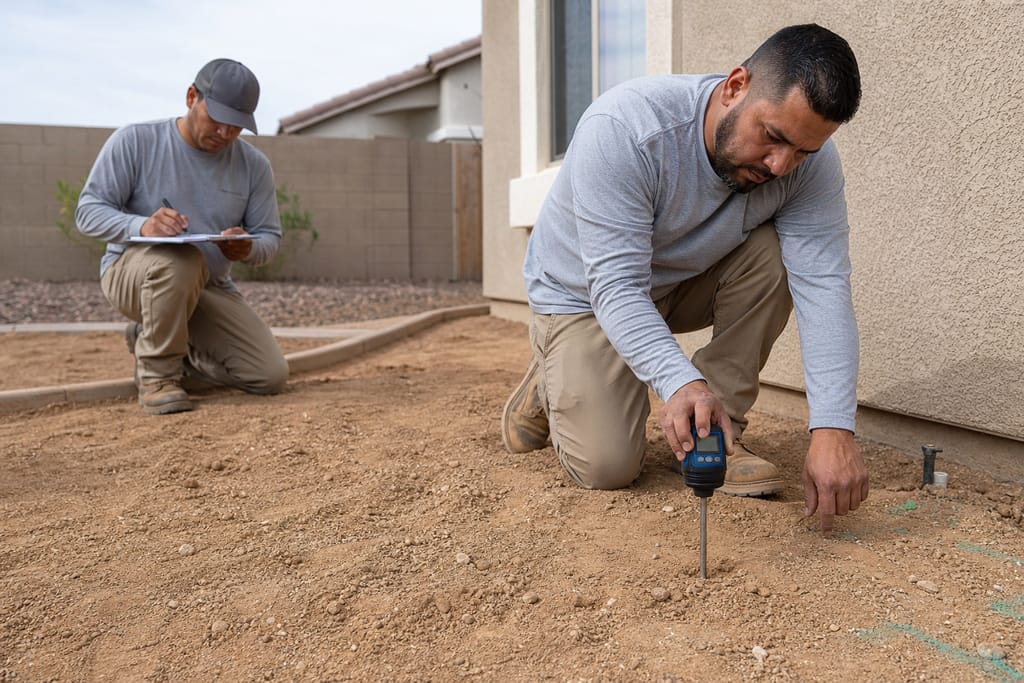
Soil moisture testing
We check soil conditions to plan drainage that works through both dry summers and wet winters.
 Step 3
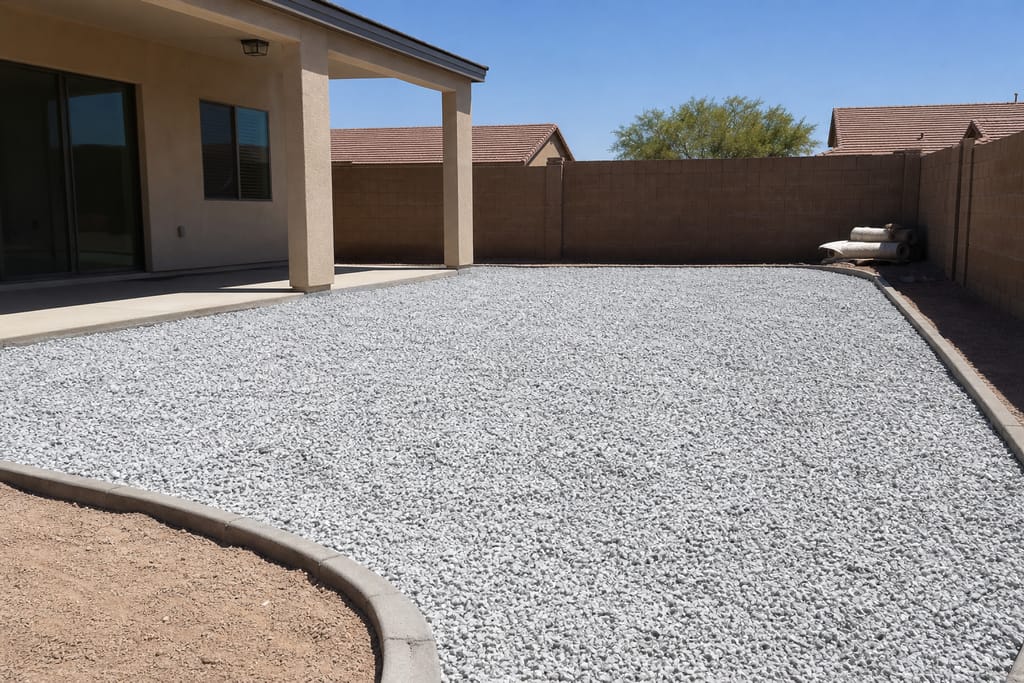
Reflective base prep
Base materials are selected to limit heat retention under the turf surface.
 Step 4
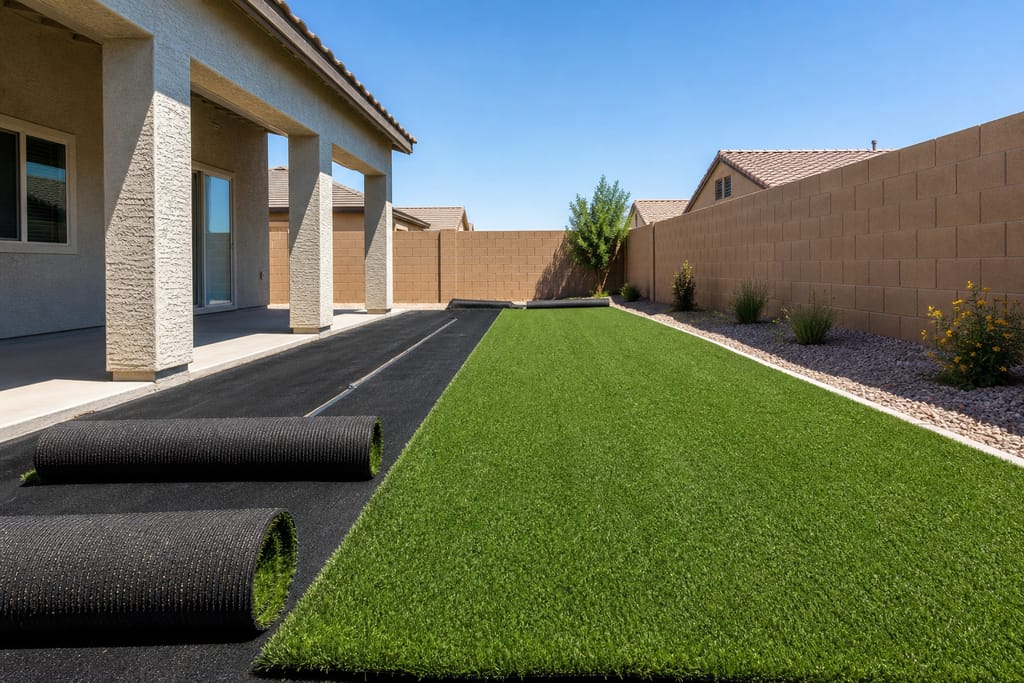
Heat-resistant turf laying
Desert-rated turf fiber goes down to resist fading and softening in direct sun.
 Step 5
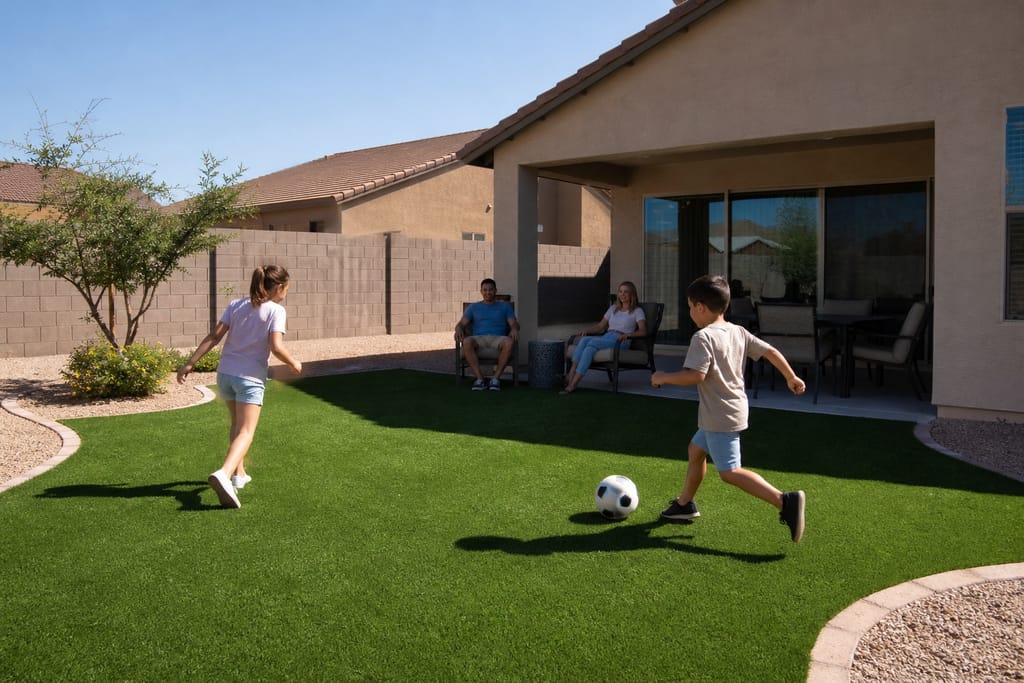
Expansion gap allowance
Seams get small built-in gaps to handle material expansion through temperature swings.
 Step 6
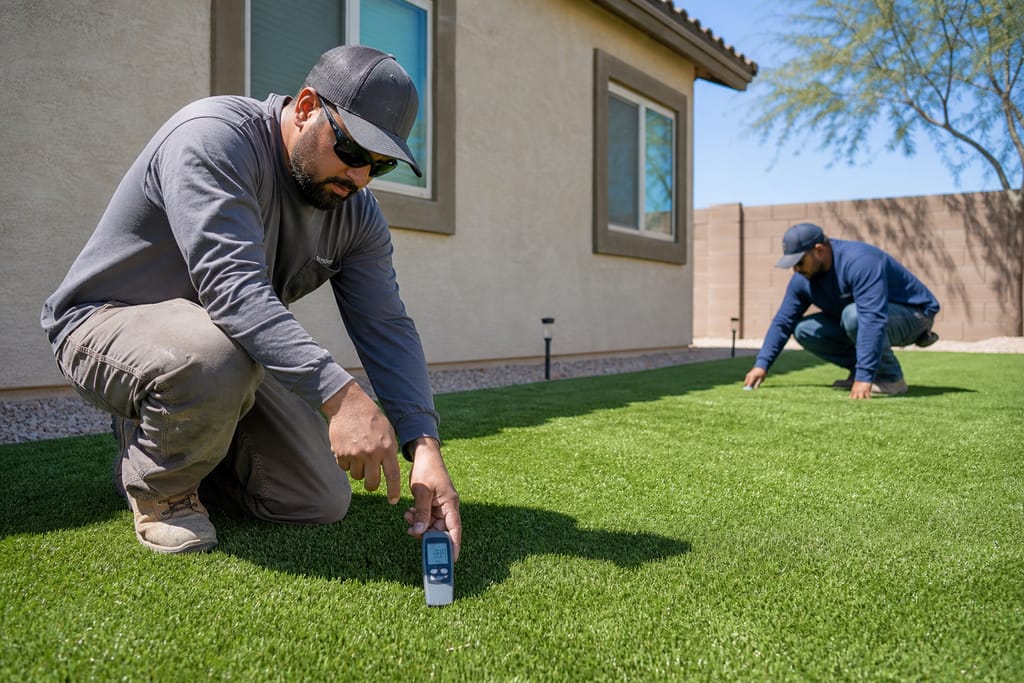
Surface cooling check
We check surface temperature performance before calling the job done.
Materials
Materials and Methods for Desert-Adapted Turf Installs
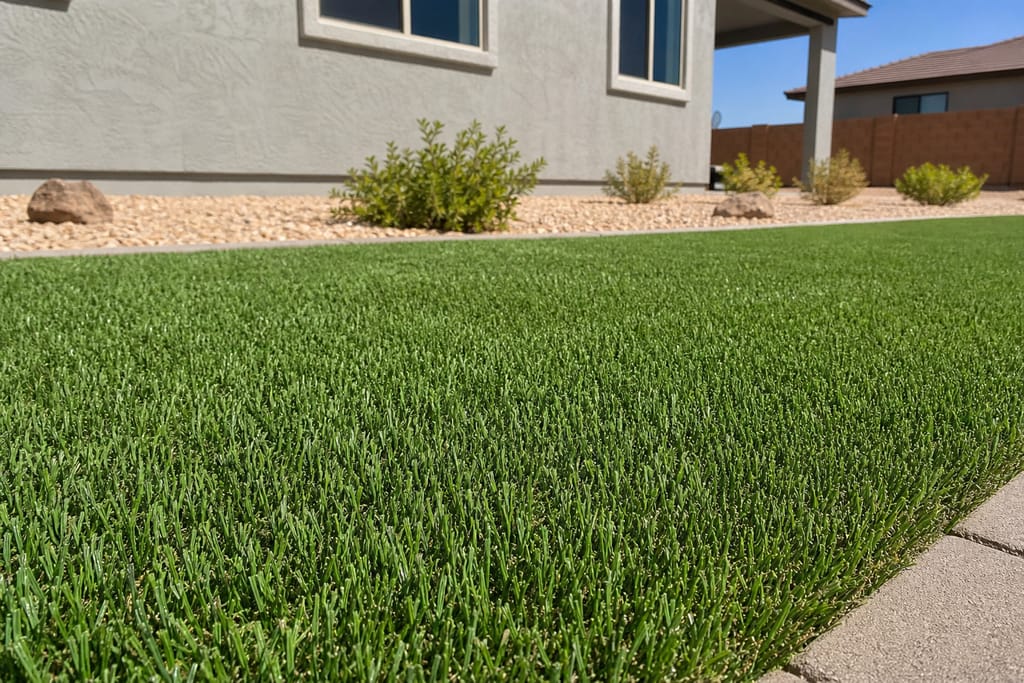
Heat-resistant turf fibers
Fiber engineered to resist fading and softening under Prescott's high-elevation UV exposure.
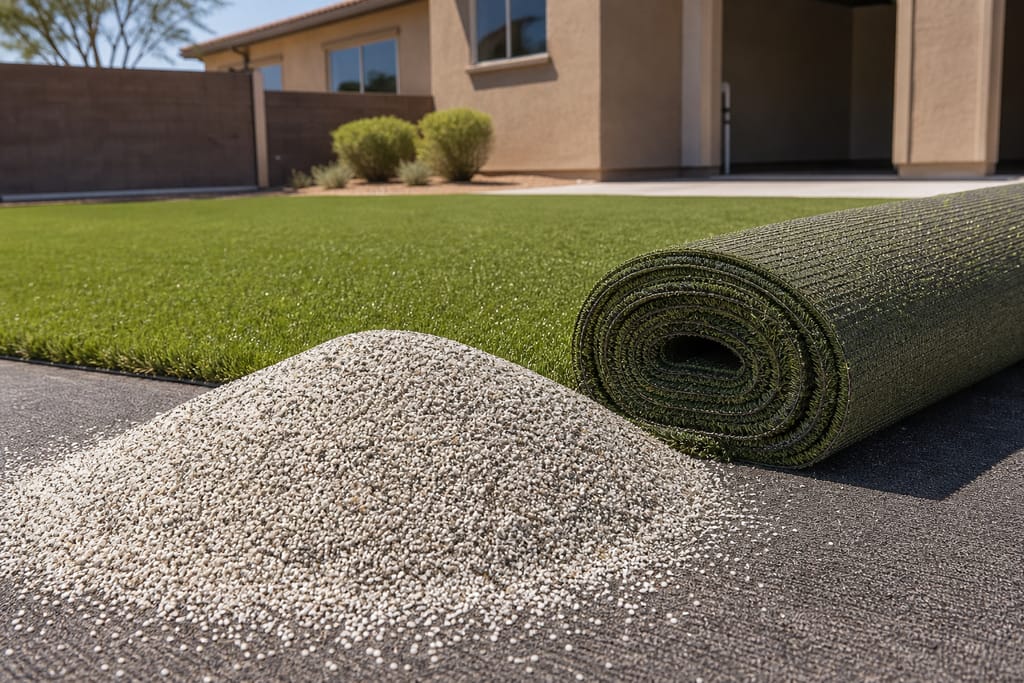
Reflective infill blend
Infill designed to reflect heat and reduce surface buildup on full-sun afternoons.
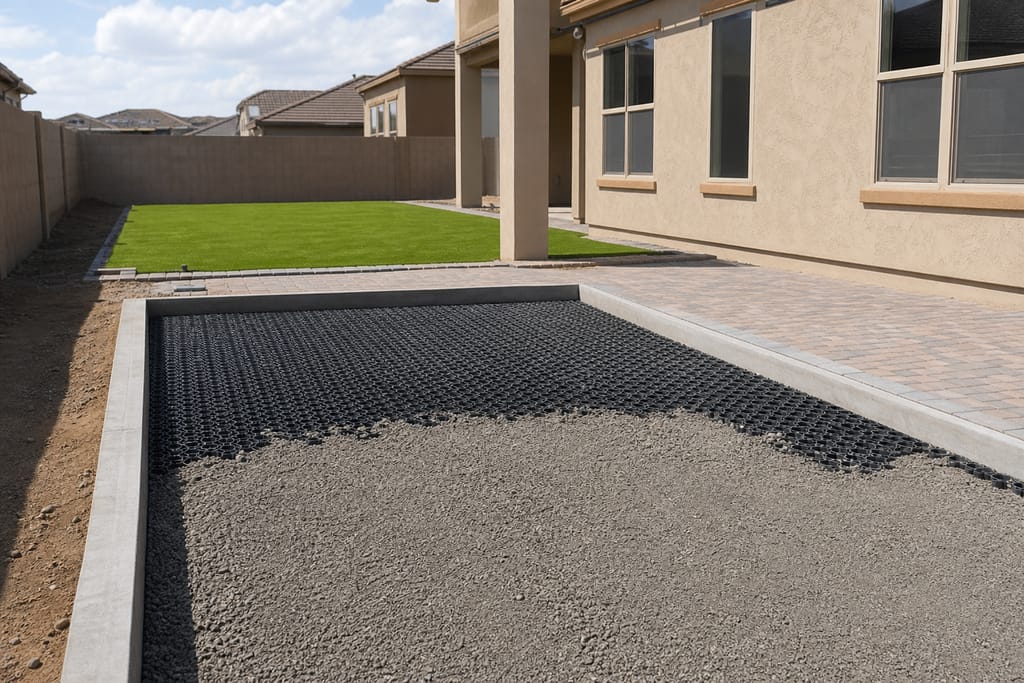
Drought-tolerant base layer
Base material stays stable in dry soil but still drains during winter snowmelt.
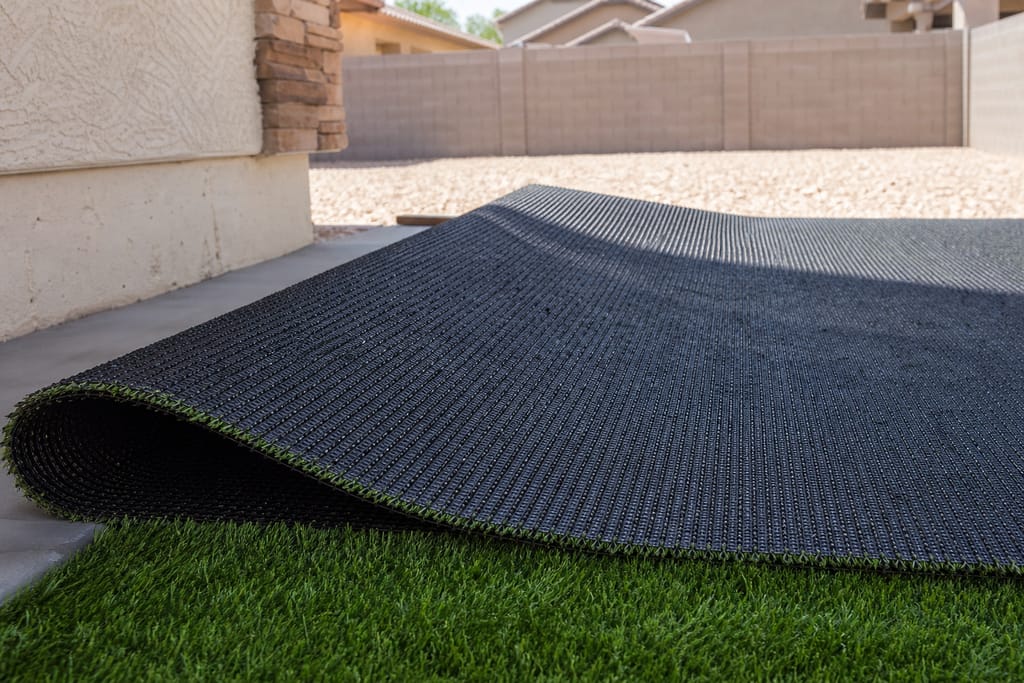
UV-protected backing
Backing treated with UV stabilizers to resist cracking from sustained sun exposure.
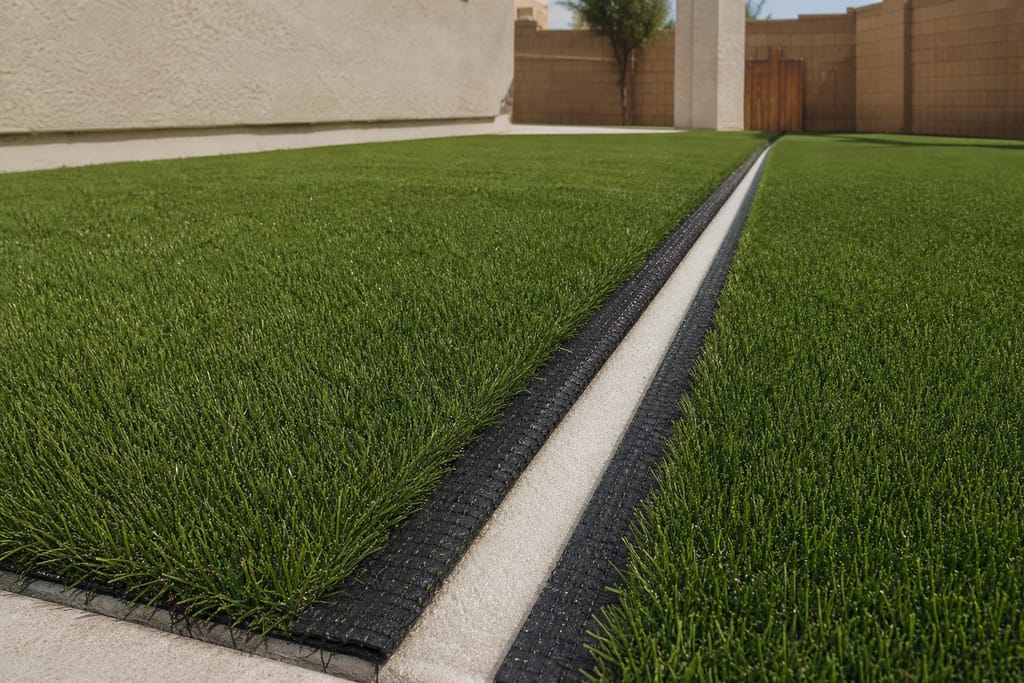
Thermal break seams
Seaming technique built to handle material expansion and contraction across seasonal swings.
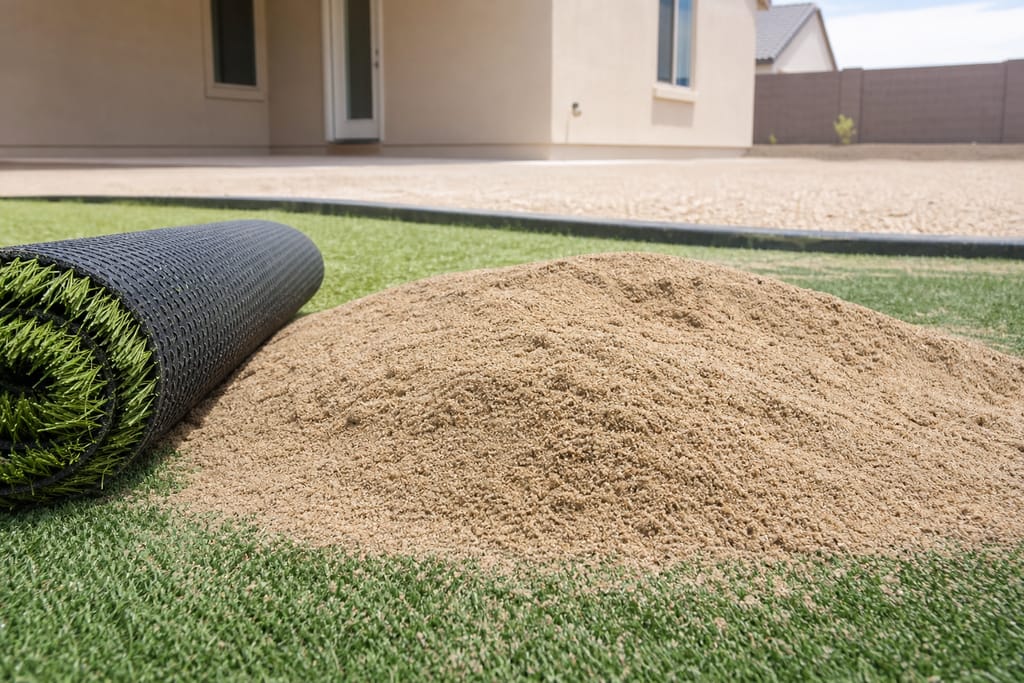
Sand-based filler
Sand filler adds stability while letting heat dissipate faster than denser infill options.
Questions on materials?
Get a Free EstimateTimeline
How Long Does a Desert-Adapted Turf Installs Take?
Timeline runs similar to a standard backyard install, with slightly more planning time for material selection.
- 01
Consult and material selection
same day - 02
Base prep and grading
1–2 days - 03
Turf lay with expansion seaming
1 day - 04
Infill and surface check
half day
Need a schedule that fits?
Get a Free EstimateCodes & permits
Permits and Codes for Desert-Adapted Turf Installs in Prescott
Confirm specifics with your city or county before larger projects.
| Typically needs a permit | Often no permit |
|---|---|
| Major grading changes tied to the install | Standard turf swap using desert-adapted materials |
| Drainage rerouting across larger lots | Material upgrades on an already-approved turf footprint |
Need help with permits?
Get a Free EstimateDIY vs pro
DIY vs Hiring a Pro for Desert-Adapted Turf Installs
| DIY | Hire a pro |
|---|---|
| Fine for small accent areas where heat and seasonal swings matter less | Generic turf kits aren't rated for Prescott's elevation UV or freeze-thaw cycling the way pro-sourced material is |
| Reasonable if you're sourcing UV-rated materials correctly on your own | Expansion-gap seaming takes experience to get right, or seams can buckle with temperature swings |
| — | Base selection affects long-term drainage through both summer and winter conditions |
Not sure DIY vs pro?
Get a Free EstimateWhen to call
When to Call for Desert-Adapted Turf Installs
- Your old turf has faded, cracked, or stiffened from sun exposure
- You're installing in a full-sun yard with no tree coverage
- You want material that holds up through both summer heat and winter freeze
- Call Prescott Artificial Turf Pros for a free estimate on climate-matched turf.
Seeing warning signs?
Get a Free EstimateBefore & after
Before and After Desert-Adapted Turf Installs
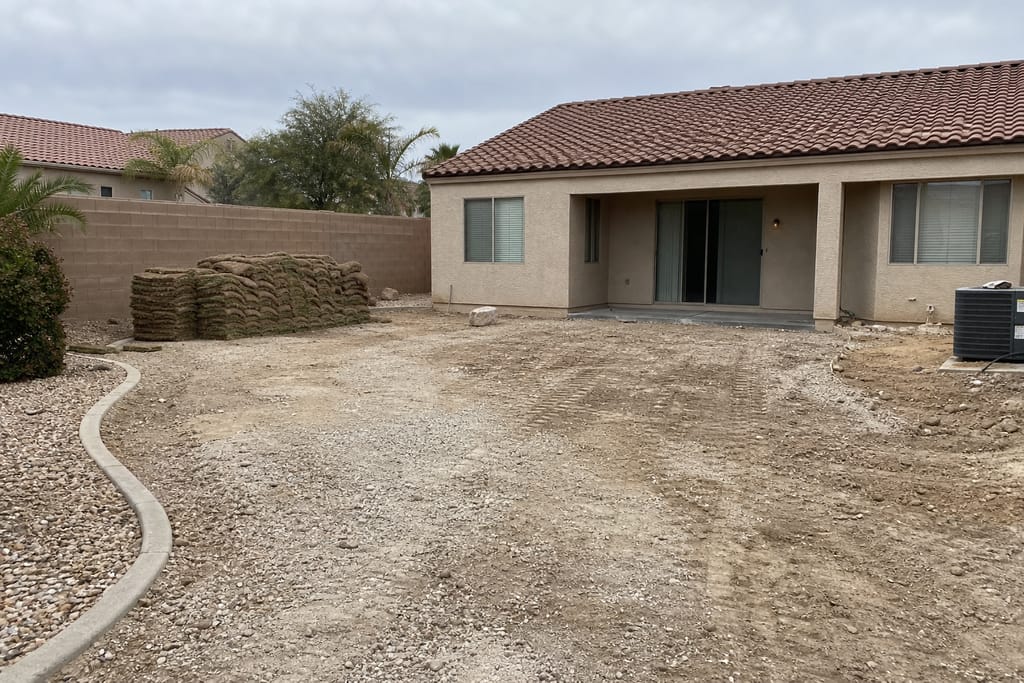
Before 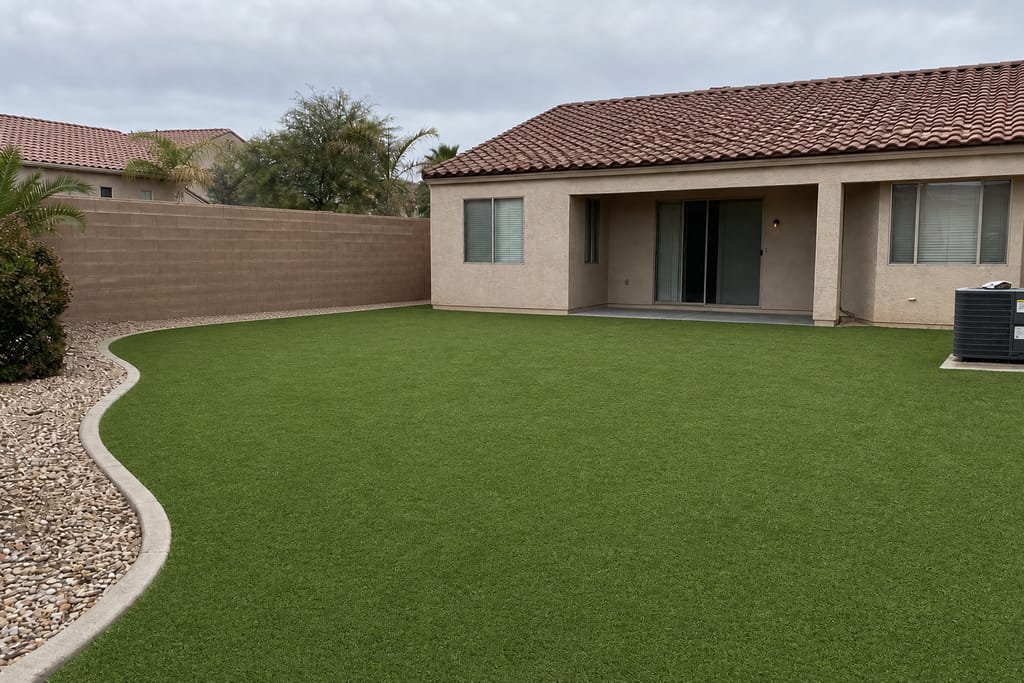
After
FAQs
Desert-Adapted Turf Installs FAQs
What makes desert-adapted turf different from standard turf?
It uses UV-stabilized fiber and backing along with base and seaming methods built for both intense sun exposure and freeze-thaw cycling, rather than a generic turf spec.
Does desert-adapted turf cost more?
UV-stabilized materials can run slightly higher than standard turf, but they hold color and shape longer, which saves on replacement costs.
Can regular turf handle Prescott's freeze-thaw winters?
Standard turf can work, but desert-adapted materials and base methods are built specifically to resist cracking and shifting through seasonal temperature swings.
How long does desert-adapted turf last?
With proper installation, UV-rated turf typically performs well for 15+ years even with heavy sun exposure.
Is DIY desert-adapted turf installation a good idea?
Sourcing the right UV-rated materials and getting expansion seaming correct is harder to DIY than a standard lawn swap.
Does this turf get hot to walk on barefoot?
Reflective infill reduces surface heat noticeably compared to standard infill, though direct summer sun will still warm any turf product.
More services
Other Artificial Turf services
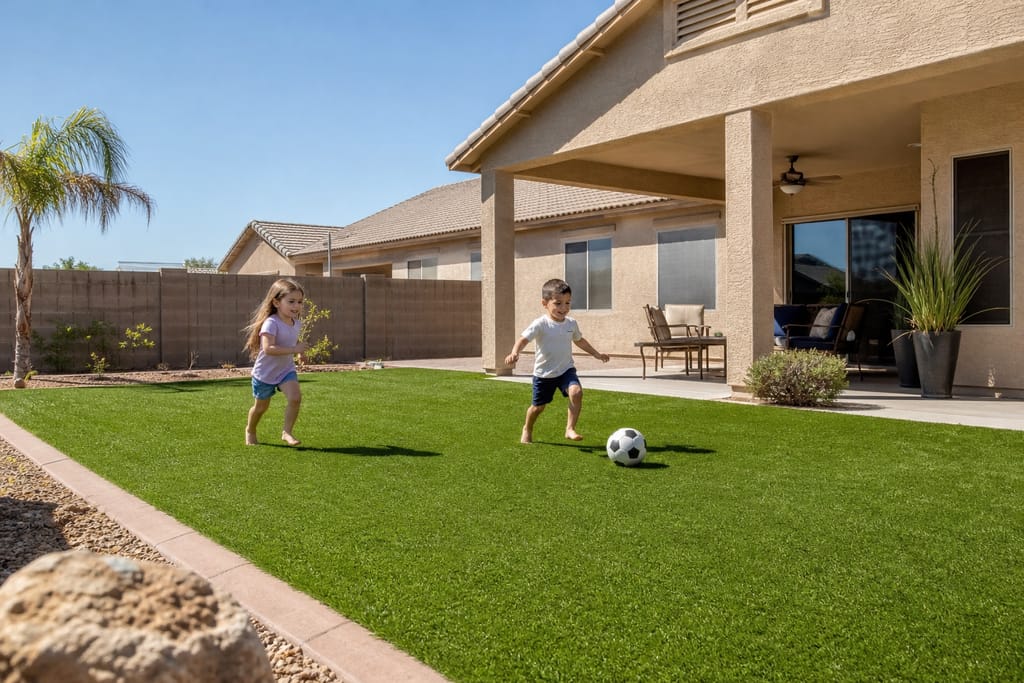
Artificial Turf Installation
Artificial turf installation with base excavation, seaming, and infill built for rocky ground. Free estimates.
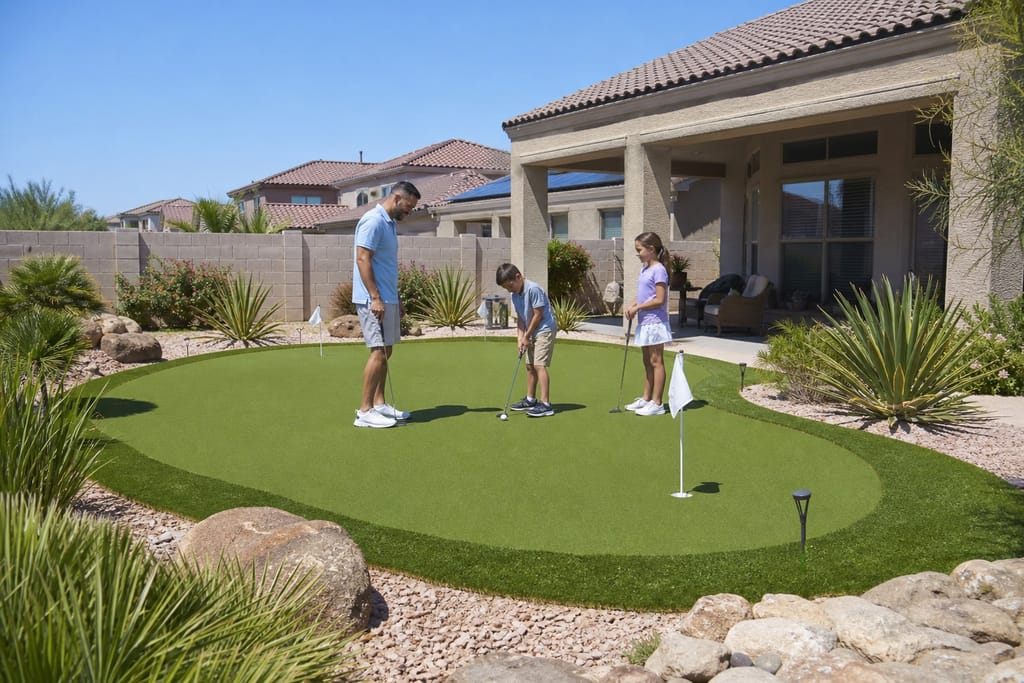
Putting Green Installation
Backyard putting green installation with true-roll turf and custom contours. Free estimates from a local turf crew.
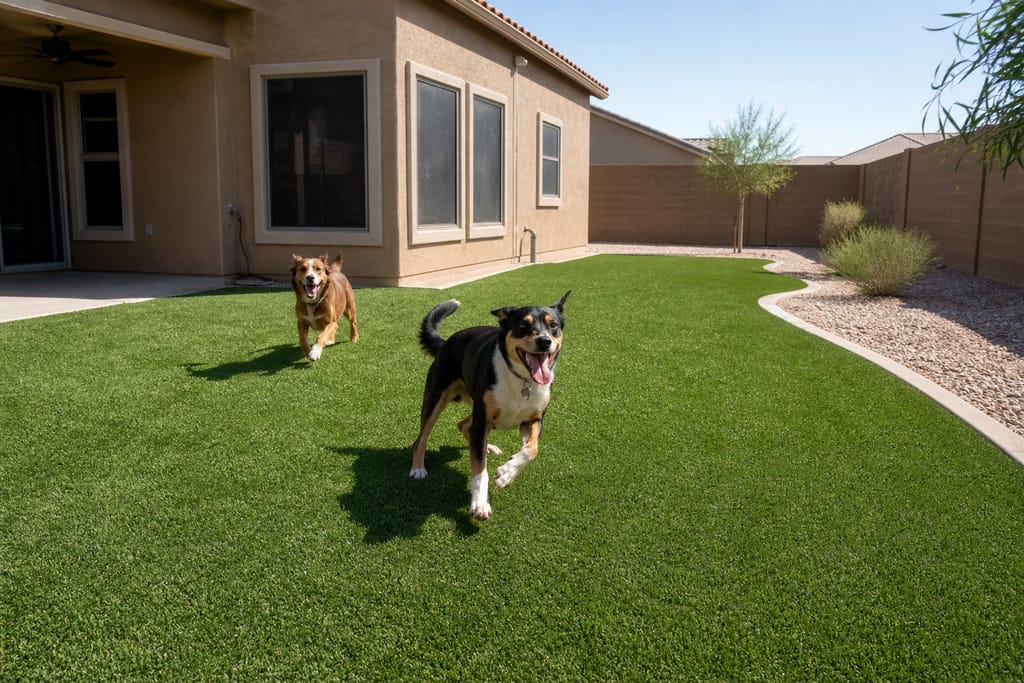
Pet Turf Installation
Pet turf installation in Prescott, AZ with odor-control infill and fast drainage for dog runs and yards. Free estimates available.
Ask about Desert-Adapted Turf Installs
Tell us about the project and how to reach you.